Strategy · Updated for 2026
F1 double-stack pit stops explained
How one pit crew services both team cars in immediate succession and why the second driver can lose time.
Quick answer
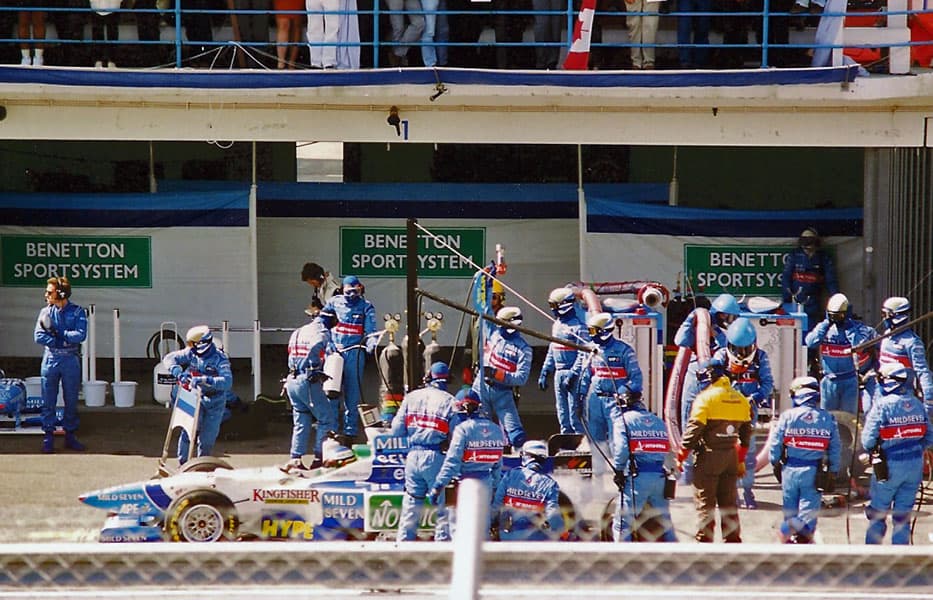
A double stack brings both team cars into the same pit box one after the other. It can protect both strategies during a sudden opportunity, but the second car must wait if the first service or release is not complete.
Why teams attempt it
A Safety Car, rain shower or tyre failure risk can make an immediate stop valuable for both drivers. Leaving one car out may cost more than accepting a short queue.
Timing the gap
The leading car must be serviced and released before the second reaches the box. Teams may slow the trailing car within the rules to create working space, but traffic and pit-lane conditions complicate the sequence.
Where time is lost
A delayed wheel change, unsafe release risk or blocked pit lane can hold the first car. The second then waits stationary behind it, multiplying the original delay.