Strategy · Updated for 2026
F1 tyre compounds explained
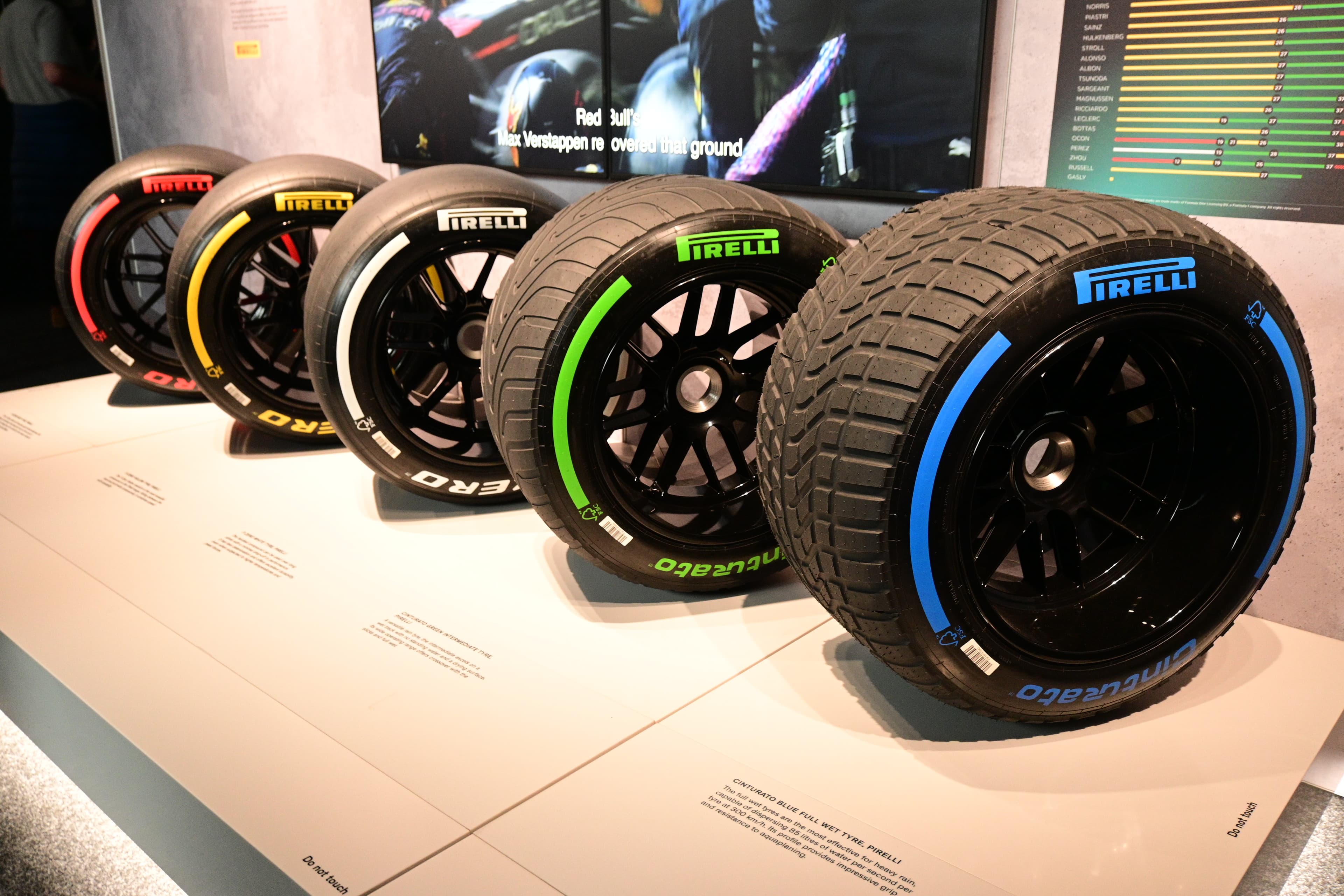
Soft, medium, hard, intermediate and wet tyres cover different grip and weather demands.
Quick answer
Softer slicks normally offer more immediate grip but a shorter useful life; harder slicks trade peak grip for durability. Intermediates and full wets handle progressively wetter conditions.
The dry range
The supplier selects a subset from its wider compound family for each venue, then labels the available slicks hard, medium and soft for that event.
The operating window
A tyre needs the right internal and surface temperature. Too cold means little grip; too hot can accelerate sliding and degradation.
Weather tyres
Intermediates clear light-to-moderate water without the tread depth of full wets. Race control, visibility and standing water can still make conditions unsafe even on the wettest tyre.